Wednesday, 31 July 2013

Cwm Bychan [Nantmor]

Juniperus communis subsp nana
For Merioneth Nats’ field meeting in June only three of us came and we worked hard for our sparse 80 records. We were pleased with the number of young Dwarf Juniper, Juniperus communis subsp. nana plants we saw, though.


Guy - a botanist photographer at work!
The weather was still unseasonably cold and there was not as much to see as we had hoped.   It was tough country and Guy and Lucia's cheerfulness kept spirits up as we had to struggle through shoulder-high bracken and rhododendron back to the car park at the end of the day.  


Tuesday, 30 July 2013

May 2013 Dolgoch Falls


Such a long time since I wrote this blog and memories of the May Merioneth Nats meeting at Dolgoch Falls have receded into the past.  I do want to record it however and upload a few photos, as it was such a good day.  Heather made it seem very easy by letting me have contact details of local landowners, particularly of Eileen Jones, Clerk to the Community Council who manages the woodlands at Dolgoch Falls. She made us feel very welcome and the farm owners did too.  I have been as remiss about sending our records to Eileen as I have about keeping up this blog!

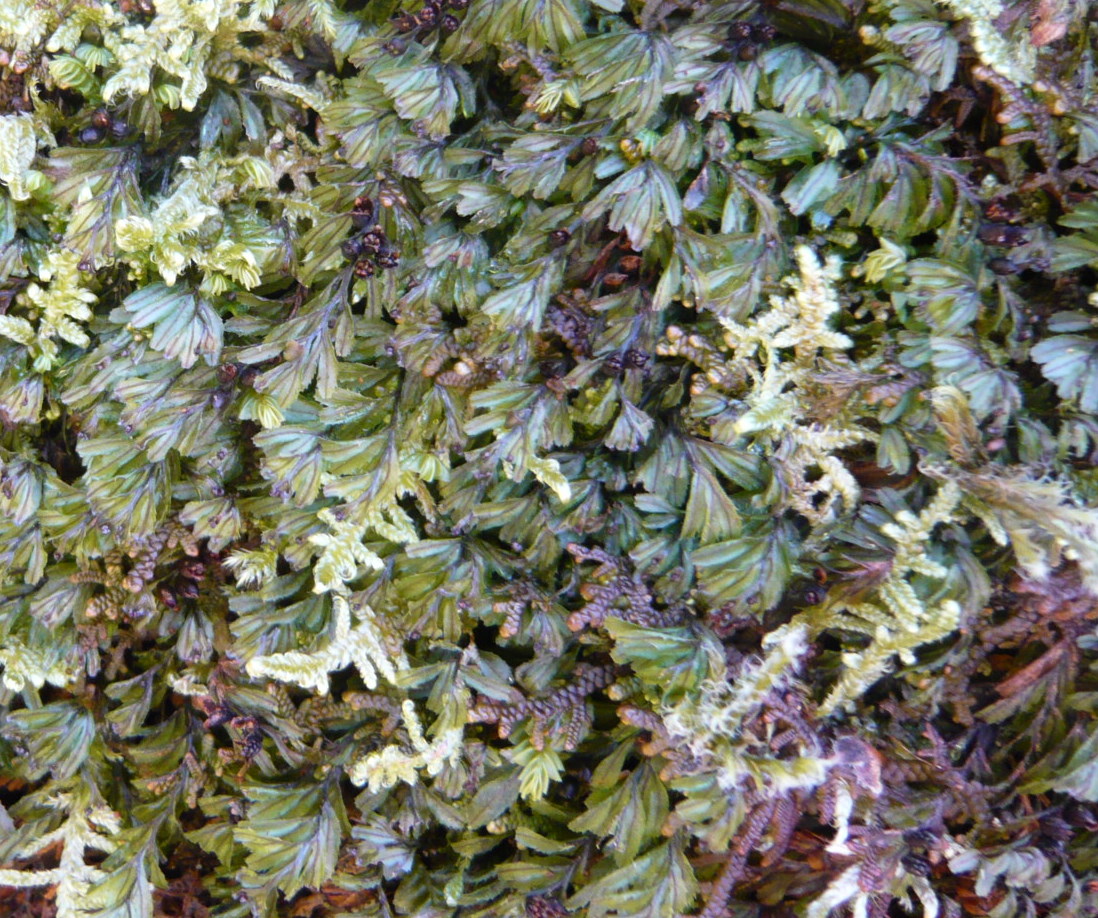
We met at the Dolgoch Falls Hotel and were detained for ages by the garden escapes and other exotics around the lower reaches.  Wending our way upwards we were now alongside the falls and now diverting round mine adits and impassable stretches of the river. There was a fine suite of woodland plants but nothing amazing.  Not only did we not find the hybrid Hymenophyllum [H x scopulorum] which Heather had hoped for but we only found one of its parents, H. wilsonii, Wilson’s Filmy-fern.  The other parent, H. tonbrigense, Tunbridge Filmy-fern, has perhaps not been seen here since 1960.


A mine adit
Reading Fred Rumsey's paper on H.x scopulorum
                                                                  
The stream at Nant y Mynach
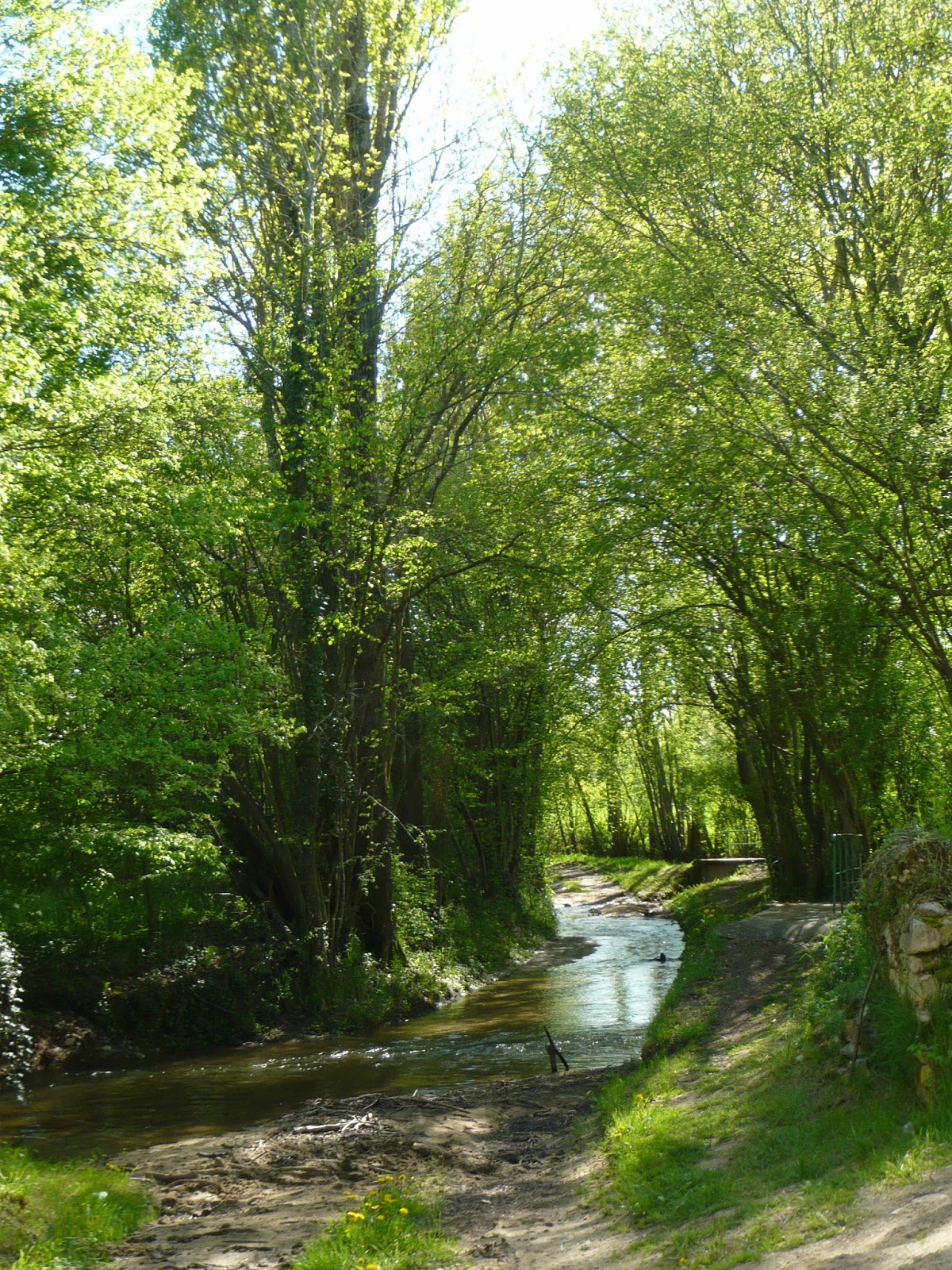
Eventually we made our way out onto the open hillside and thence down towards the road again.  After we scoured the roadside for [mostly reseeded] plants, Heather left us to take the direct route home, while we tracked back to the cars alongside a slow-flowing stream, where we collected some nice aquatic records.  These included a putative Callitriche obtusangula, which was later determined by Richard Lansdown as ‘only’ C. stagnalis, and a Water Crowfoot which has still to be determined but may be Ranunculus penicillatus.  I had intended to return to get more material, but I fear that this will now have to wait for another year!


Friday, 10 May 2013

France - Spring in the Auvergne

Early Purple Orchids growing beside the road
I have just taken a week's French leave - away from the bare meadows of Merioneth with the trees  showing hardly a hint of green, to the lush countryside of the Auvergne in Central France.
The weather wasn't that much better though and we had violent thunderstorms the second day I was there - just as we did in Morocco in March!


Le [petit] ruisseau - le Grand Vallon!


The little river that runs by the house turned into a raging torrent with great quantities of soil washing down and being left in sandy shoals as the water receded.  It is interesting to speculate how much fertility has been lost with the change in land use from pasture to intensive wheat and rape cultivation.  But the unimproved meadows were still wonderful with lots of Meadow Saxifrage, Saxifraga granulata with Myosotis ramosissima and M. discolor, Early and Changing Forget-me-nots, growing together.

Saxifraga granulata
The crater of the Puy Pariou


 One day we took our Dutch guests and their two children to the ChaĆ®ne des Puys, an area of extinct volcanoes near Clermont Ferrand.  In the morning we walked up through Hazel coppice and beech woods to the top of the Puy Pariou through sheets of Wood Anemones and Cowslips while higher up  there were Oxlips, Primula elatior, too. But the prize for me was these Herb Paris, Paris quadrifolia plants, just coming into flower.


In the afternoon we took this little train to the top  of the Puy de Dome [1464m] where there is a famous observatory manned by military and civil personnel, but closed to the public since a bomb exploded there in 1976.  It was bitterly cold!  We donned every scrap of warm clothing we had with us as we tried to find somewhere sheltered from the biting north wind.


The weather was lovely again as I left France, but it didn't last long and as I write I wonder whether the plants know it's almost summer and that we will be at Caerdeon in three weeks' time!


Saturday, 27 April 2013

Rhoslefain

This area is notable for outcroppings of micro-gabbro so we had hoped to see some good base-rich-dependent plants.  Unfortunately, we were just too early as the weather still hadn't caught up, but we did see Wheatears, Swallows and House Martins - the first ones I had seen this year - so spring must be almost here!
Broadwater on a grey and misty day

We started off from  Llech Llwyd, where Elwyn Roberts, the farmer, had let us park, and walked down across sheep-grazed, improved pasture to a boggy area near the shore of the curious Broadwater, the almost land-locked estuary of the River Dysynni.  There were so many brackish-loving plants to be seen but without flowers so  that even with the indispensible 'Poland' to aid identification, we soon felt we could use our time better and decided to go on to the quarry.


Walking along the lane it seemed we had moved on in time with the hedgebanks full of the first Stitchwort, Stellaria holostea, the first Dog Violets, Viola riviniana and the hillsides ablaze with early-flowering Gorse, Ulex europaeus.

Viola riviniana - Spring is on the way!
Blackthorn winter


Arum maculatum already  in flower 
Smiling in spite of the weather!
We reached the quarry where we had a damp lunch with a low-lying grey  mist. Roadstone is still being extracted here and we found some curious plants in the settling tanks, including a Stonewort, Chara sp. [one of those curious 'honorary' vascular plants],  Typha latifolia, Bulrush, and a great swathe of Equisetum telmateia Great Horsetail.

Some people were almost ready to give up by then but the tougher souls said that we should try the other dolerite outcrop at Foel Fendigaid a couple of miles further north where we found more interest in a small flush and further on a grassy hillside which posed us a couple of challenges.
Foel Fendigaid 
We had been discussing the possibility of finding Upright Chickweed. Moenchia erecta [which has been recorded here in the past], when sharp-eyed Heather L found a different plant of the Caryophyllaceae, which we eventually decided was a Spergularia, tentatively identifying it as S media mainly on the characters of the scarious stipules.  Later, Annie found some strange woody stems over two metres long crawling about in the dead bracken, which stumped us for a while, until we decided they were the over-wintering stems of Solanum dulcamara, Bittersweet, only just beginning to leaf, and not enough to make identification easy!

A Minotaur beetle, with its prominent thoracic 'horns'
The joy of our group outings are the many skills that members bring along.  Expertise in bryology, lichens, and in many classes of invertebrates are just a few of their subjects. I feel so lucky to have these opportunities.
I have passed the burrow exits of the Minotaur Beetle Typhaeus typhaeus so many times without connecting them with this fellow. He lives on rabbit and sheep dung, but lets the female do most of the work of excavating shafts underground where the eggs are laid.


Wednesday, 10 April 2013

Caerdeon Residential


It is just seven weeks today until the start of the Caerdeon Residential [May 28th - 31st] which proved so enjoyable in July last year. Are we tempting fate by trying a different time of year now? This late spring makes it hard to imagine there may be anything to find, but May in 2012 gave us a heatwave!
We were fortunate last year to discover Caerdeon, formerly a “gentleman’s residence” where Darwin once stayed, which is now an outdoor activities centre for Liverpool Hope University.  It is beautifully situated high above the Mawddach Estuary and overlooking The Cader Idris range, and very central for a number of interesting sites.

 Barmouth Harbour
© Copyright Gordon Hatton
We are almost full but still have space for three or so more people to enjoy botanising around the Mawddach estuary including coastal, river, montane and broad-leaved woodland habitats.As before there will be a choice of habitat and difficulty of terrain arranged for each day, or of course people will be free to choose their own locations.  It will be very much a square-bashing exercise and I will be really grateful for your help.

The cost of staying at the centre for three nights, full board, is around £140 - a modest price when I tell you that the food is ample and tasty, with diets of all varieties catered for.  Sleeping accommodation is basic, but everyone has a room to his/her self although it may mean sleeping in a bunk!  We have plenty of room to work in good lighting and wi-fi is freely available.

Rhinog Fach and Y Llethr
http://en.wikipedia.org/wiki/Rhinogydd
I have added some photos of Merioneth to tempt you to this beautiful part of the world.  If any of this interests you, please contact me via this site or the Merioneth page on the BSBI website http://bsbi.org.uk/merioneth.html
Llyn Caer Euni
Llechwedd Fwyalchen
The slope of the Blackbird
Harlech from Morfa Dyffryn
Copyright Tom McCallister

Tuesday, 9 April 2013

Merioneth Nats, 28th March 2013

I wonder if I am just getting impatient in my old age or if this year spring is really late in showing signs of arriving. Last year we had so early a summer that everything was over by August so perhaps that's why I am impatient to get going.

*Narcissus pseudonarcissus: our native daffodil?
Last week, four of us met in Talybont on a bright cold day and walked through holiday chalets and caravans to follow the north side of the River Dalar as it approaches the sea.  We made a good list of ruderals including Erophila verna, Common Whitlow-grass.  This little plant is such an opportunist that it fruits almost as soon as it appears, but these were so tiny and showed no signs of any fruits, so I have recorded them as E verna sensu lato without being able to determine them more precisely. Then we walked through the planted areas, which included many cultivated daffodils: However we were all convinced by the nativeness* of a population of perhaps 100 flowering plants on the river bank as we left 'civilisation' and approached the fields.

Roger Cope, botanist!
After a sunny but chilly lunch we looked at a field with many weedy species but pressed on towards the sea hoping to find more small ephemerals, but it took a careful search by Roger on his hands and knees to find even a tiny bit of Cerastium semidecandrum, Little Mouse-ear!  We recorded predictable dune plants like Ammophila arenaria, Marram Grass and Rosa spinosissima, Burnet Rose but the nicest finds near there on shingle were non-flowering plants of Glaucium flavum, Yellow Horned-poppy.


As we trudged back to the village and our cars we all, I think, wondered when we would be able to start recording in earnest, and when the jet stream causing all these cold winds from the east would move away north and let a typical soft, mild spring begin.

* But now determined by Mick Crawley as "a venerable cultivar, Narcissus 'Princeps' "

Wednesday, 13 March 2013

Coed y Parc, February 28, 2013


Sanicle in flower
[Wikimedia Commons]
We were blessed at last with a fine day, for our first meeting of the year, and had a goodly turnout of members, also welcoming people from the Non-flowering Plants group.  Once we got into the wood - the access lane side had quite a pull for these bryologists - we bypassed the small meadow where Adder's Tongue was recorded in the past, but it's now become very overgrown. Going west, we recorded such nice things as the leaves of Wood Sedge, Carex sylvatica and Sanicle,  Sanicula europaea, which are both typical plants of humus-rich woodland.

Tunbridge Filmy Fern
Hymenophyllum tunbrigense
We reached the Nant y Ceunant, "the stream of the ravine", where the nimble Paul Green found Wilson's Filmy Fern, Hymenophyllum wilsonii, on its steep sides. I was anxious to justify my old record here of the Tunbridge Filmy Fern, H, tunbrigense, and Paul duly obliged, finding it growing on an old tree stump. We then wandered back towards the rocky gorge of the Afon Arran, over the bridge by the old mill, and back up the road.  More nice things there, the best of which was Polystichum setiferum, Soft Shield Fern.
P. setiferum showing detail of pinnules


Thanks to everyone, especially Brian Burnett and his bryologists for coming and Paul for his sharp eyes and recording skills which undoubtedly helped to bring the list for the day to well over 100 vascular plants.